


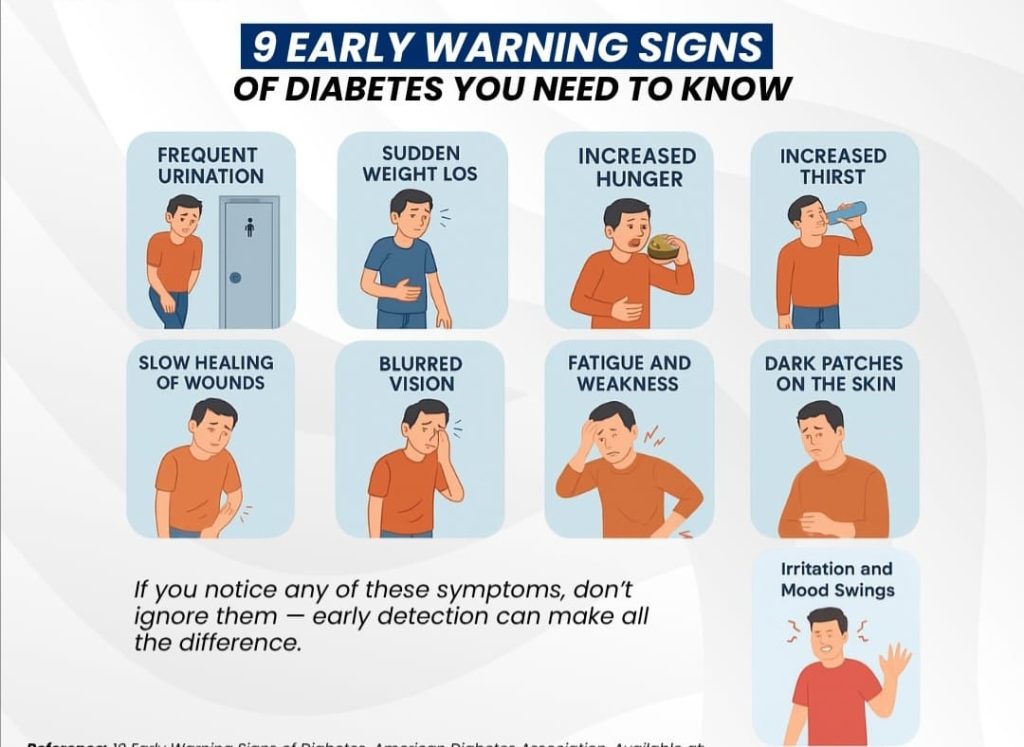
Diabetes is a chronic health condition that affects how the body processes blood sugar (glucose). Many people live with diabetes for years without knowing it because the early signs are often mild and ignored. However, recognizing these early symptoms can help prevent serious complications and long-term damage.
One of the earliest and most common signs of diabetes is frequent urination. When blood sugar levels rise, the kidneys work harder to remove excess glucose from the blood. This causes increased urine production, which leads to frequent trips to the bathroom, especially at night.
Another early symptom is excessive thirst. Because the body loses more fluids through frequent urination, it triggers constant thirst. Drinking water may provide temporary relief, but the thirst usually returns quickly.
Unexplained fatigue is also a warning sign. When glucose cannot properly enter the body’s cells, the body lacks energy. As a result, people may feel tired even after adequate rest or sleep.
Increased hunger is another symptom many people overlook. Despite eating regularly, the body’s cells are not getting enough glucose, causing persistent hunger. This can sometimes lead to unexpected weight changes.
Blurred vision can occur when high blood sugar levels cause fluid to be pulled from the lenses of the eyes. This affects the ability to focus clearly. If blood sugar remains uncontrolled, vision problems can worsen over time.
Slow healing of wounds and frequent infections are also common signs. High blood sugar weakens the immune system, making it harder for the body to heal cuts, bruises, or infections.
Tingling or numbness in the hands and feet can indicate nerve damage caused by prolonged high blood sugar. This symptom often develops gradually and should never be ignored.
Early diagnosis of diabetes allows for better management through lifestyle changes, proper diet, exercise, and medical care. If you notice multiple symptoms, it is important to consult a healthcare professional for proper testing and guidance.